

CONSUMPTA MATER
De Rebus Naturae series
2025
Diameter 150 cm
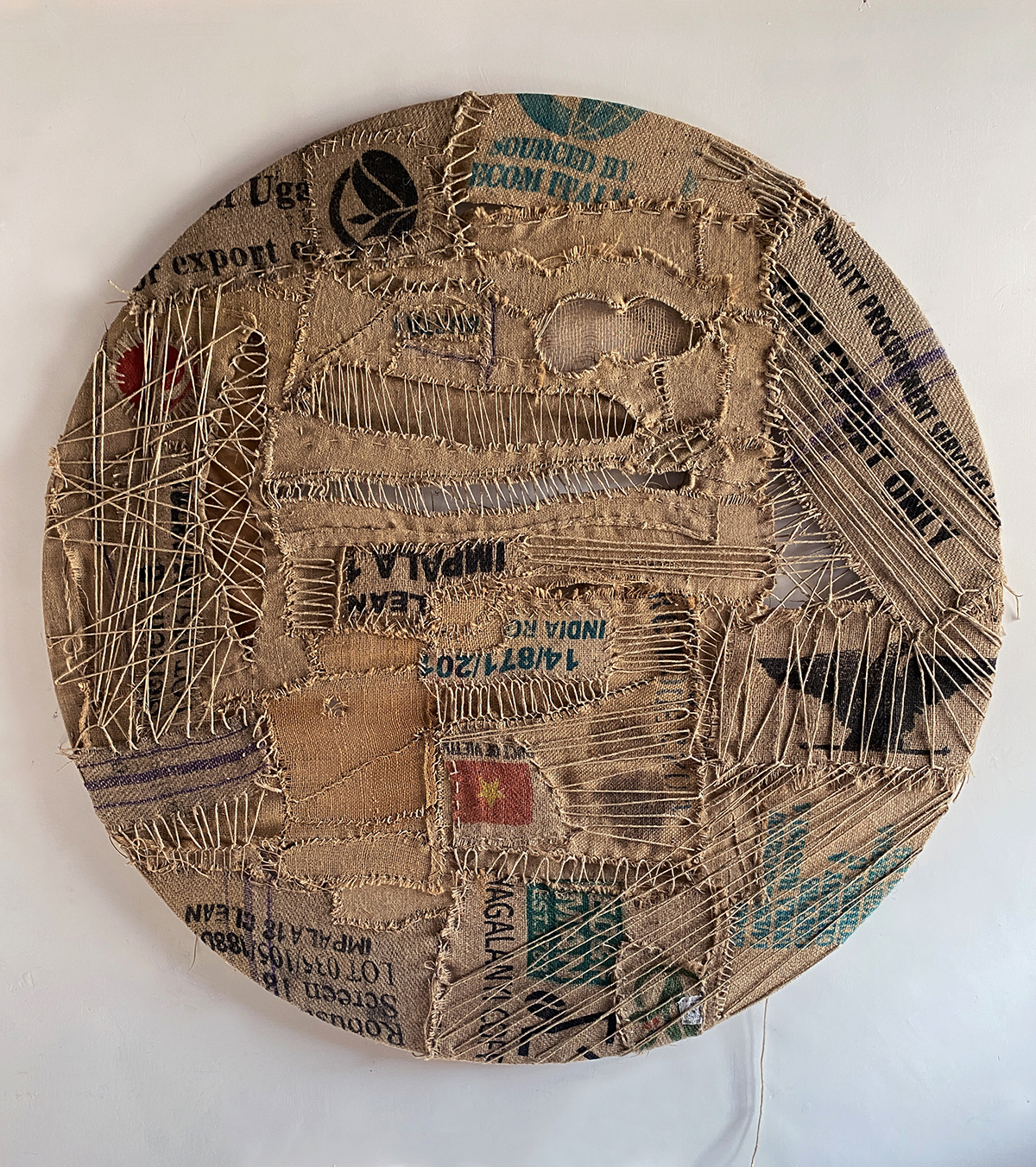
Sewn tapestry made from jute sacks and ropes on a circular frame.
The work arises from the urgency to question the relationship between humankind and nature in a time of ecological disaster and global inequalities. A large tapestry, composed of fragments of jute sacks from all over the world, becomes a surface of memory and testimony. The sacks, once used to transport coffee, cocoa, sugar or corn, tell the story of an economy that has exploited lands and bodies, erasing varieties and disrupting the balance of territories and communities.
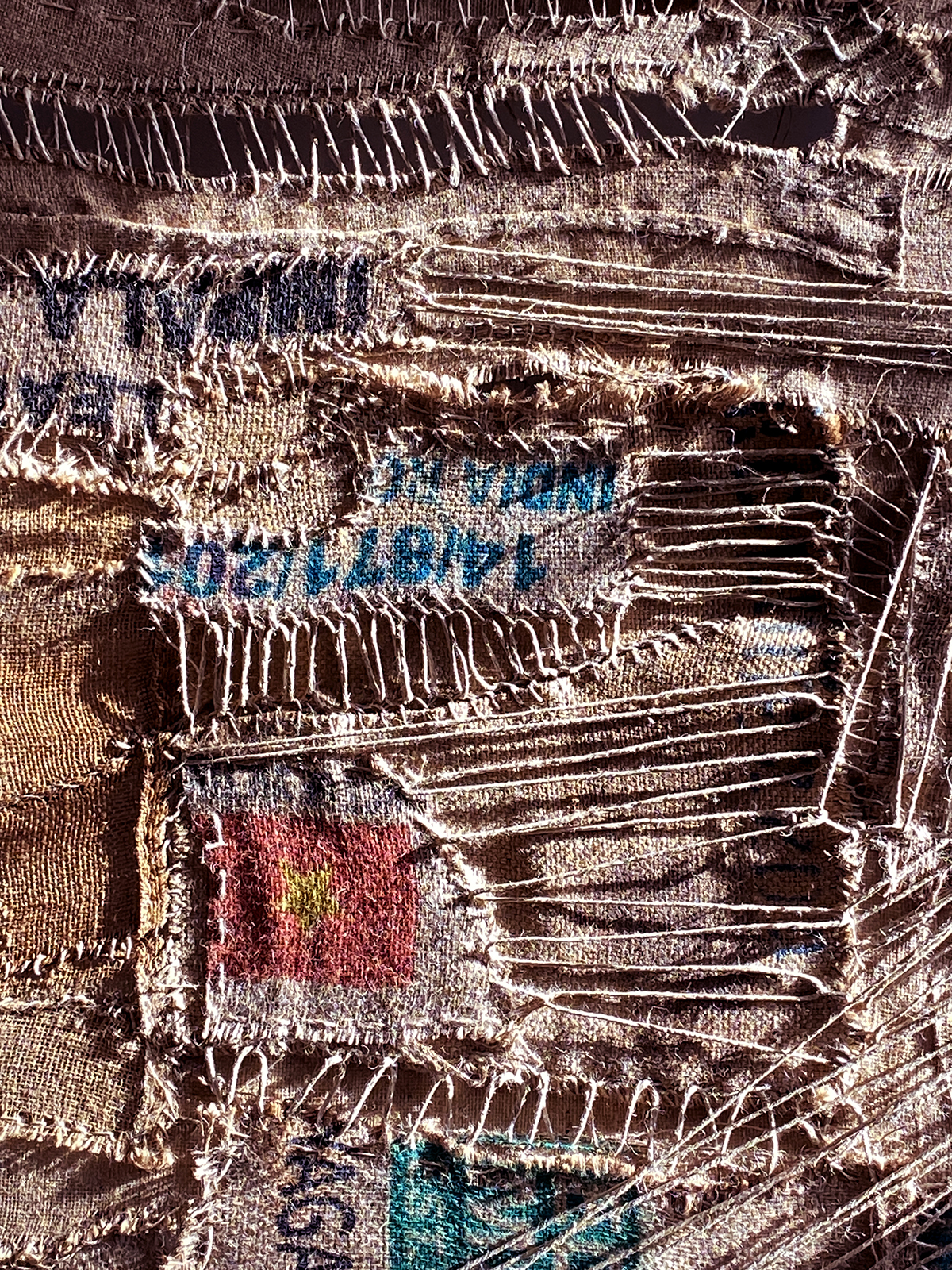
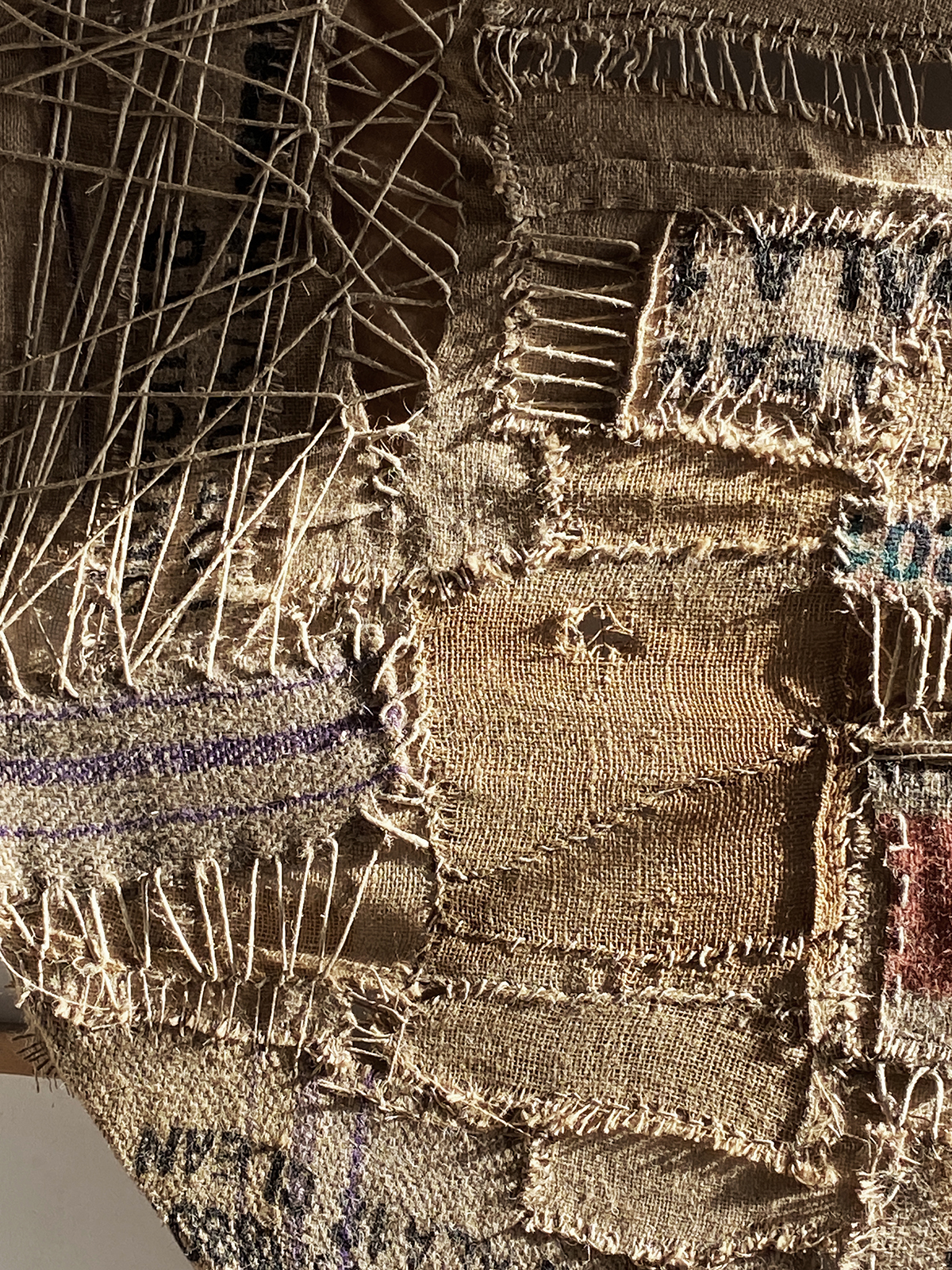
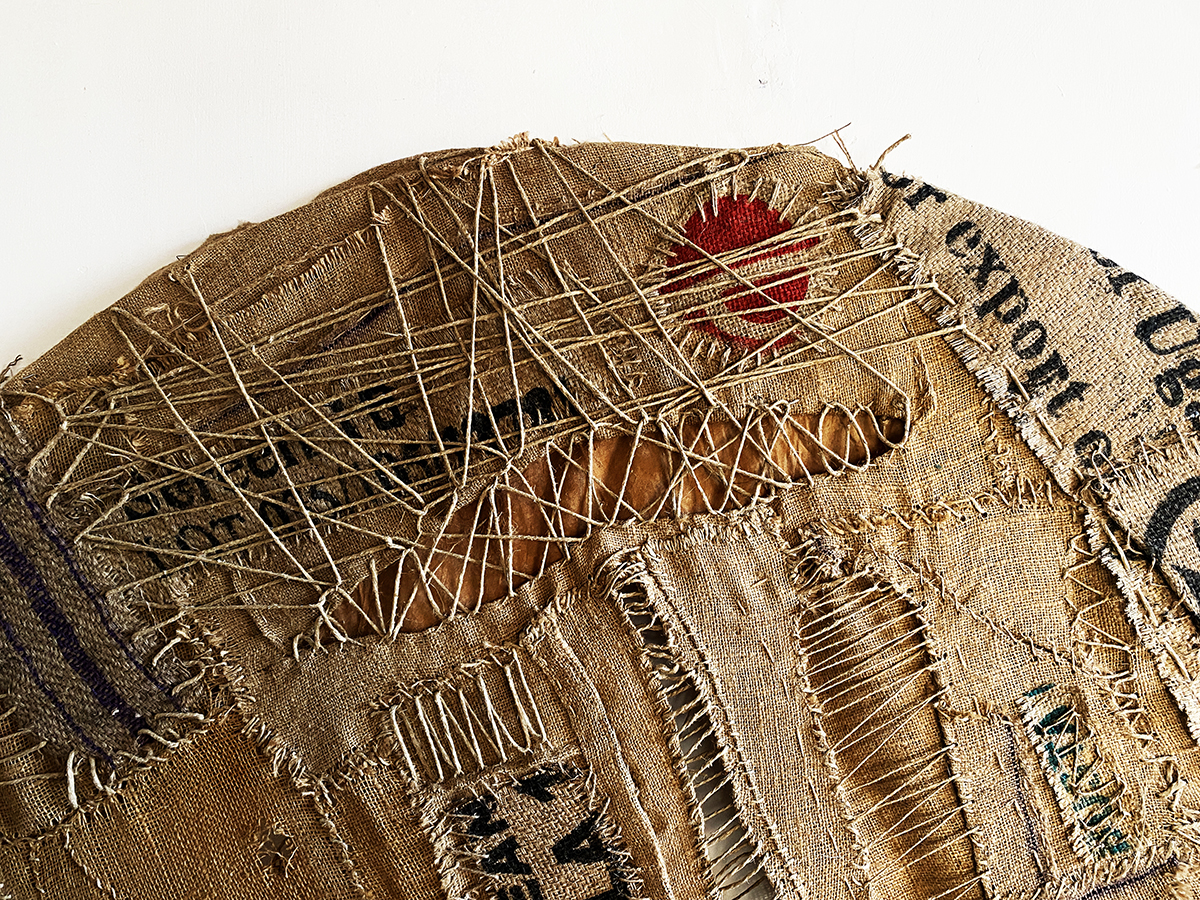
Consumpta Mater takes the form of a circular structure charged with tension, composed of worn jute sacks sewn together with taut ropes that mark and stiffen its surface. The marks imprinted on the fabrics — traces of trade routes and distant geographies — reveal the global origin of the materials and testify to how different territories now share the same vulnerability.
The work appears dramatic and worn, resembling land exploited to its limits, where monoculture has eroded soils, erased varieties and compressed entire systems to the point of deformation. The hard, constricting seams trace a map of tensions that makes visible the pressure exerted on impoverished ecosystems, deprived of breath and resilience. The industrial lettering and logos, sewn together and reassembled, form a mosaic of global dependencies: the belly of nature reduced to a container, emptied and commodified.
Consumpta Mater restores the image of the earth at its breaking point: territories consumed, eroded and stripped of their vital complexity. The material reveals a profound transformation: bent, torn and marked by relentless pressures, a tangible memory of broken systems and compromised futures. A harsh, worn image that compels the gaze to confront devastation and the very fragility of life on the planet.
Category
Featured, Textile Sculptures