

FOBIE – The Fears of Imaginary Demons
2024
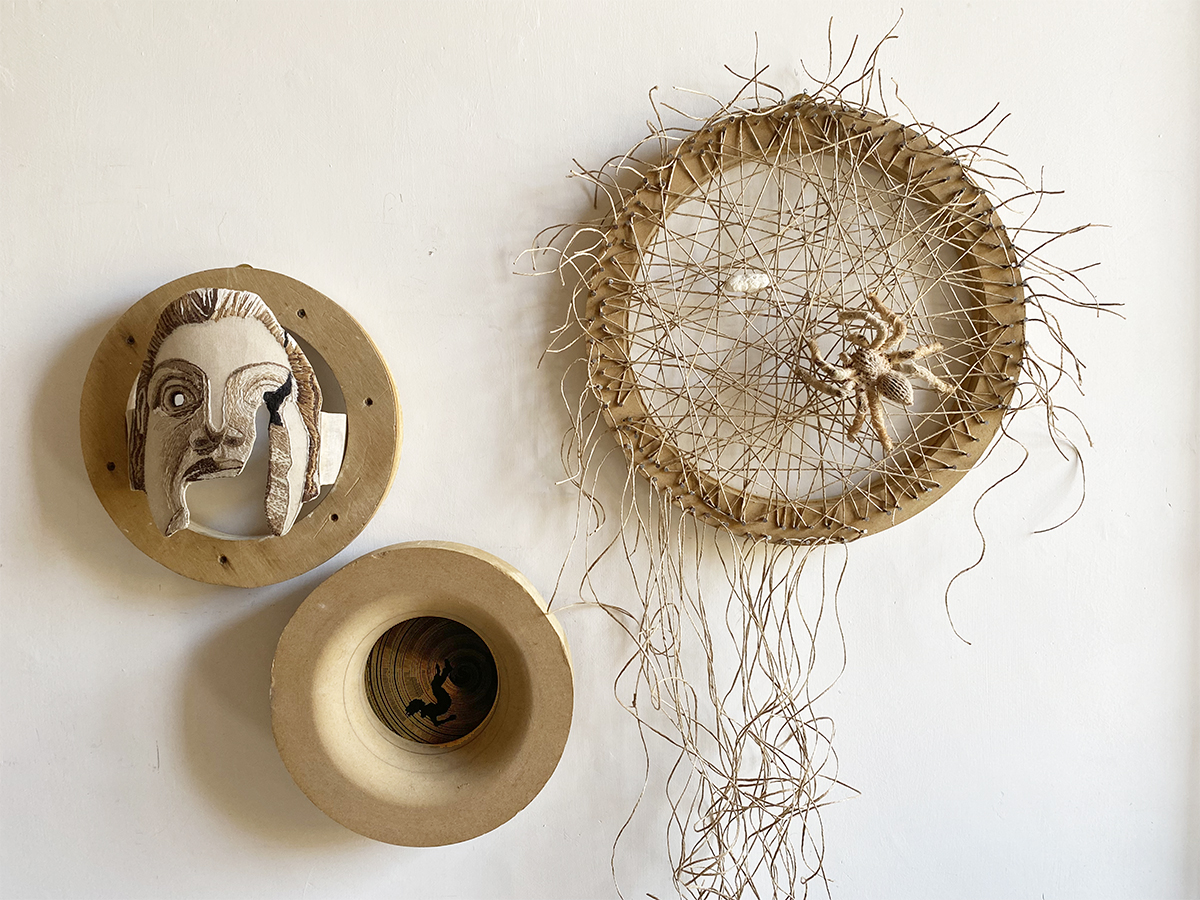
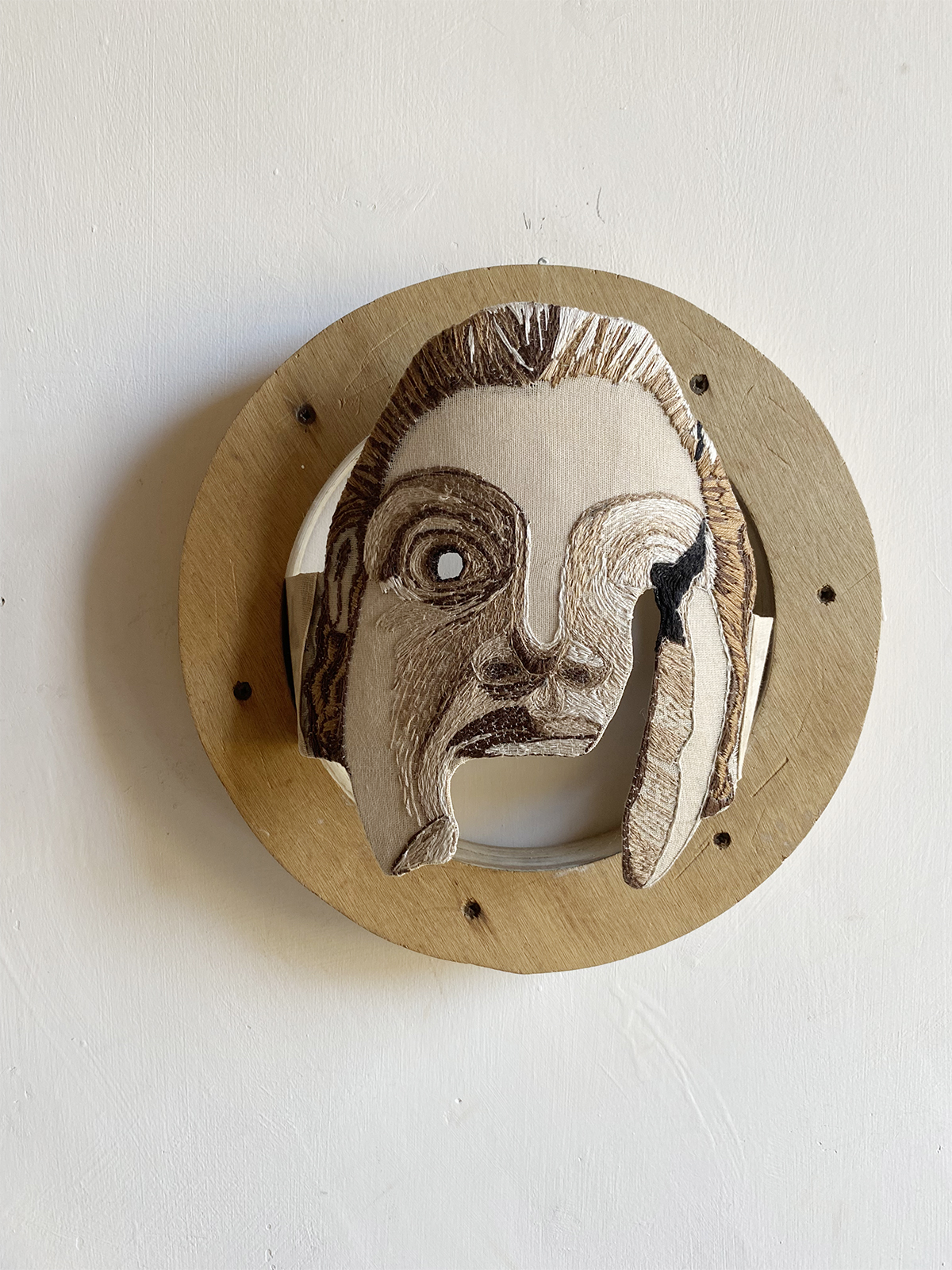
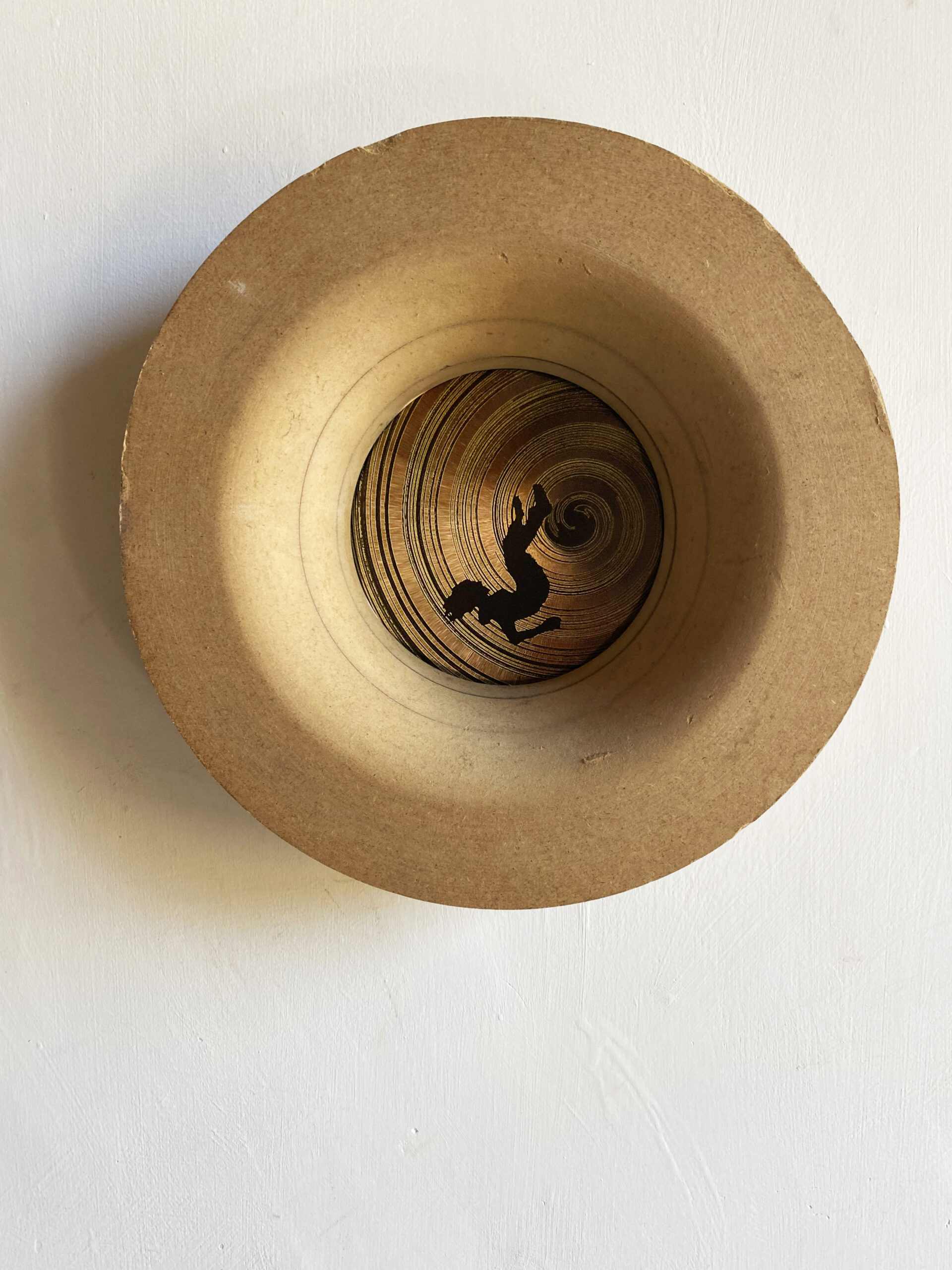
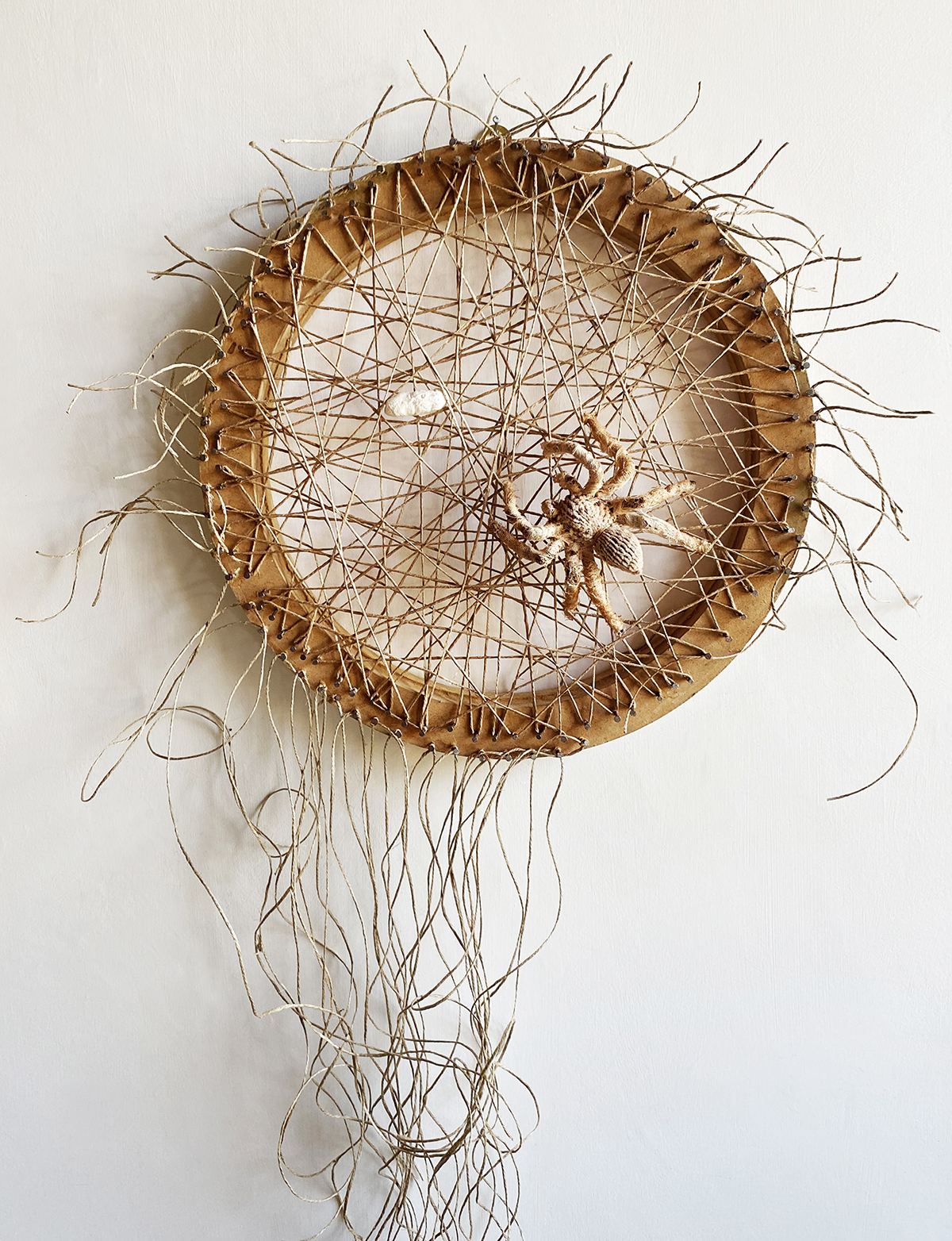
Acarophobia D. 60 cm – Maskaphobia D. 30 cm – Acrophobia D. 30 cm
Triptych Circular wooden and MDF frames – mixed media – digital printing – embroidery and crochet with cotton thread – cords.
“The Fears of Imaginary Demons” — Benjamin Rush (1798)
The aspect of Fear that I have explored in my work is that of Phobia. Unlike other primary emotions, fear has manifestations that are, by definition, pathological: phobias.
A phobia is a distortion of the normal response of fear, intense and persistent, triggered by something that does not represent a real danger, but is perceived as uncontrollable. An extreme, irrational and disproportionate fear of something that is not a real threat develops when a person experiences an exaggerated or unrealistic sense of danger in relation to a situation, an object or an animal.
Working on the triptych “The Fears of Imaginary Demons”, which considers three phobias as examples, I was able to observe and discover that their common denominator is generated by the fear of losing control; fear as a reaction distorted by the loss of mastery over oneself. Imagining losing control of things, being unable to manage events and one’s own destiny, creates an exaggerated anxiety that can be understood as a way of preventing and eliminating suffering.
Everything that is unforeseen, unexpected and uncontrollable is unacceptable.
In Arachnophobia, fear is triggered by the inability to control the rapid movement of the spider’s countless legs; by being unable to predict the unexpected path it will take. One irrationally experiences the fear that it will inevitably be upon oneself, or of feeling that one is being bitten, or of becoming fatally trapped in its invisible web.
People who suffer from Acrophobia feel agitated not only when they are in very high places, but also when they merely imagine or mentally anticipate the situation they fear most: falling into the void. It is a phobia manifested by an intense fear of falling when looking down from a high place, or even of experiencing the temptation to jump.
The triggering element is horror vacui, the fear of the void that represents the unknown. The void where there is nothing, and therefore everything is possible, and for this very reason escapes control.
In Maskaphobia, it is the uncontrollable other. This phobia arises from the discomfort we experience when confronted with the representation of an almost human face, but not entirely human. Masks, with their ability to alter or conceal facial expressions, can create an unsettling ambiguity, blurring the boundary between the familiar and the unknown. The mask makes it difficult to read facial expressions and anticipate the other person’s reactions, elements that are crucial to human communication.
What you cannot control will inevitably prevent you from sensing, understanding and anticipating; it will immobilise you and prevent you from fleeing; it will make you fall or suffocate. What you cannot control will inexorably lead you to death.
Confronting my phobias creatively has been a very powerful and interesting experience. Playing with the objects of my fear, emptying them of meaning because otherwise they would be untouchable, allowed me to handle and sew the spider, embroider the mask and plunge into a digital void.
It also highlighted the fear of losing control as the matrix of my phobias and how it conditions my emotionality and rationality, but also how this ongoing battle is a source and reservoir of my creativity and artistic research.
Category
Textile Sculptures