

IN GREMIO MATRIS – In the Womb of Transformation
De Rebus Naturae series
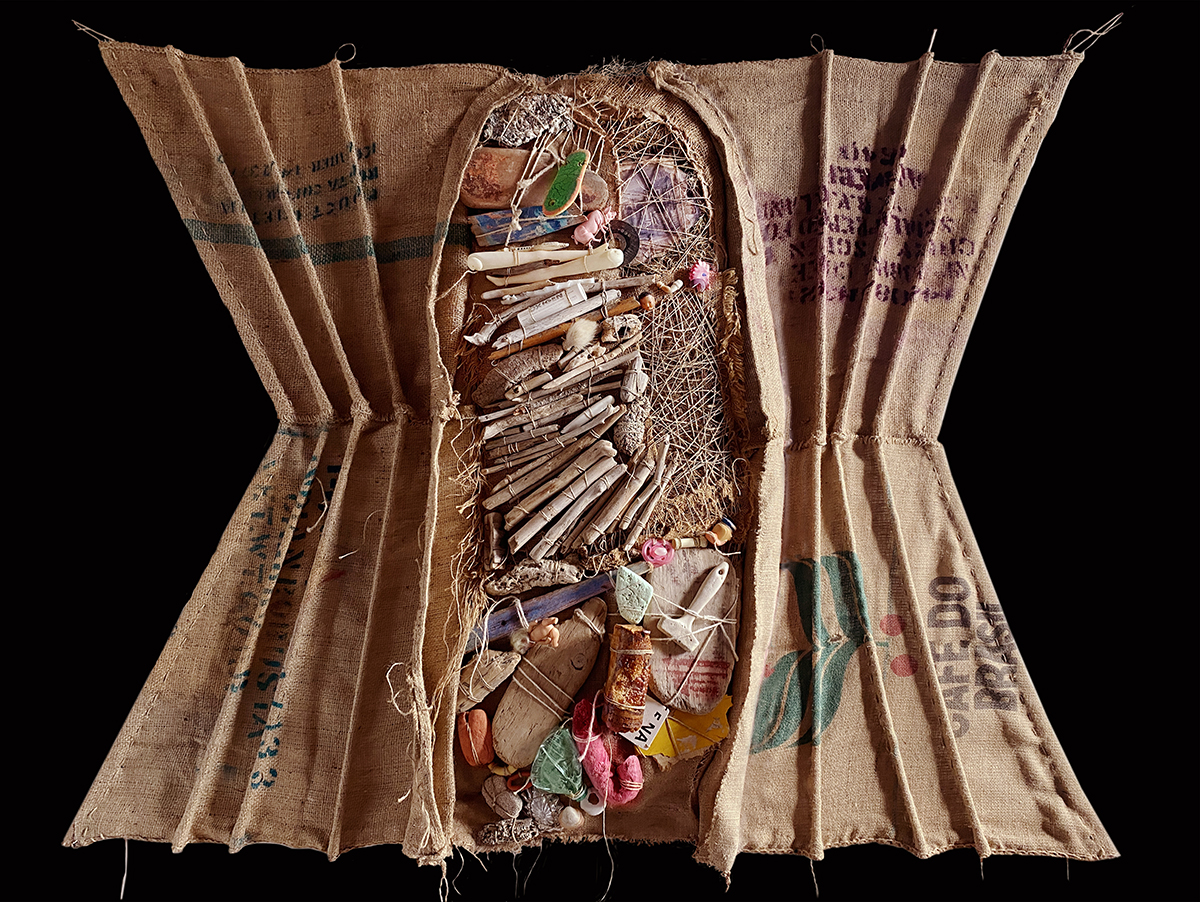
2025 cm 150×140 Tapestry sewn from jute sacks and ropes – ready-made
The work presents itself as a neutral observer of the moment when Nature, ancient mother and matrix of life, receives what humankind leaves behind. It expresses neither judgement nor condemnation: it simply records the gesture through which Nature incorporates and transforms the remains.
The figure evokes a symbolic body of Mother Nature. The surface-skin, in jute, preserves the imprint of journeys and passages, with traces of distant lands impressed upon the material. The form recalls a guêpière: an open womb, a belly that receives and reworks, a breast that nourishes even the disorder of the world.
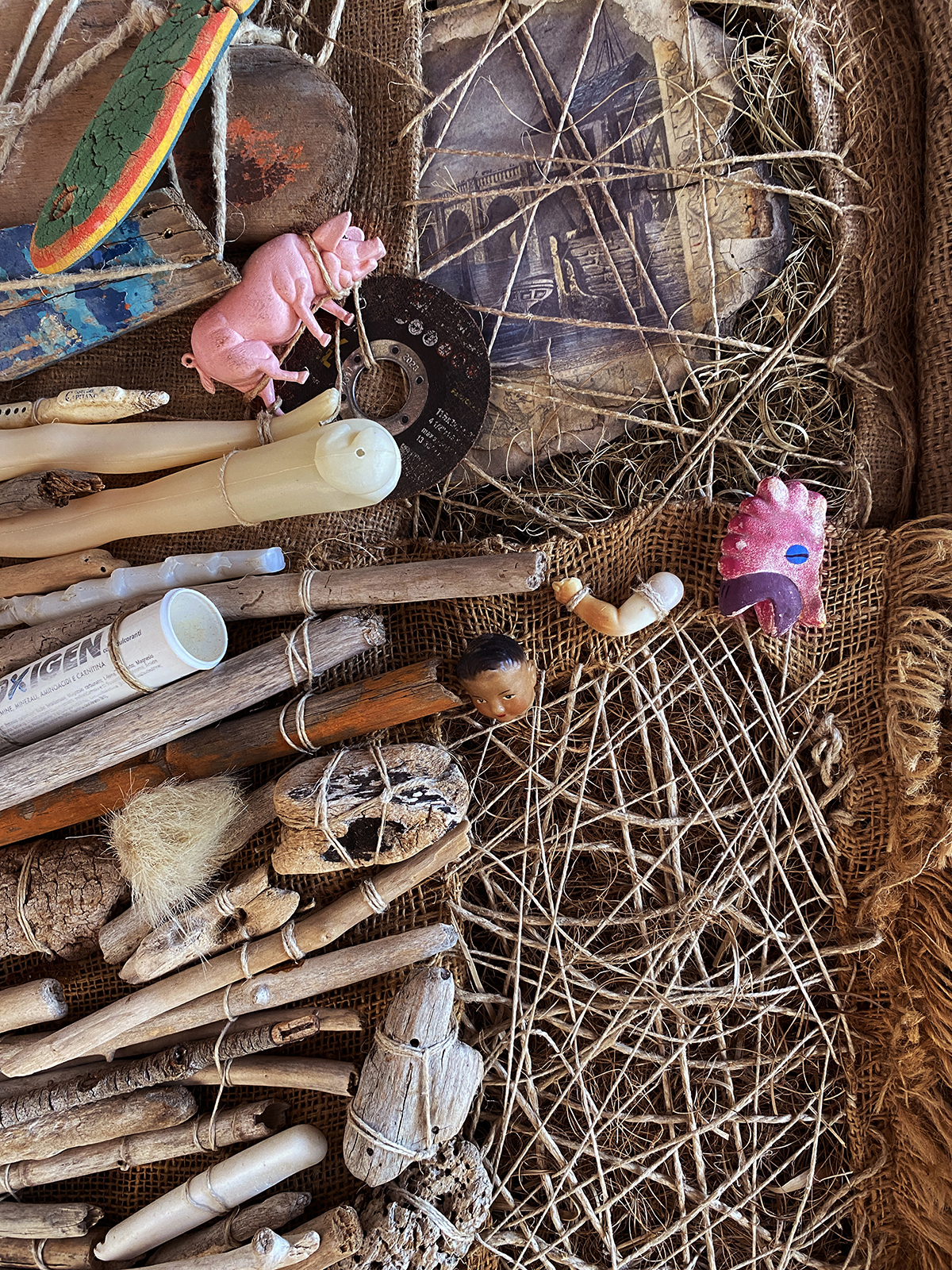
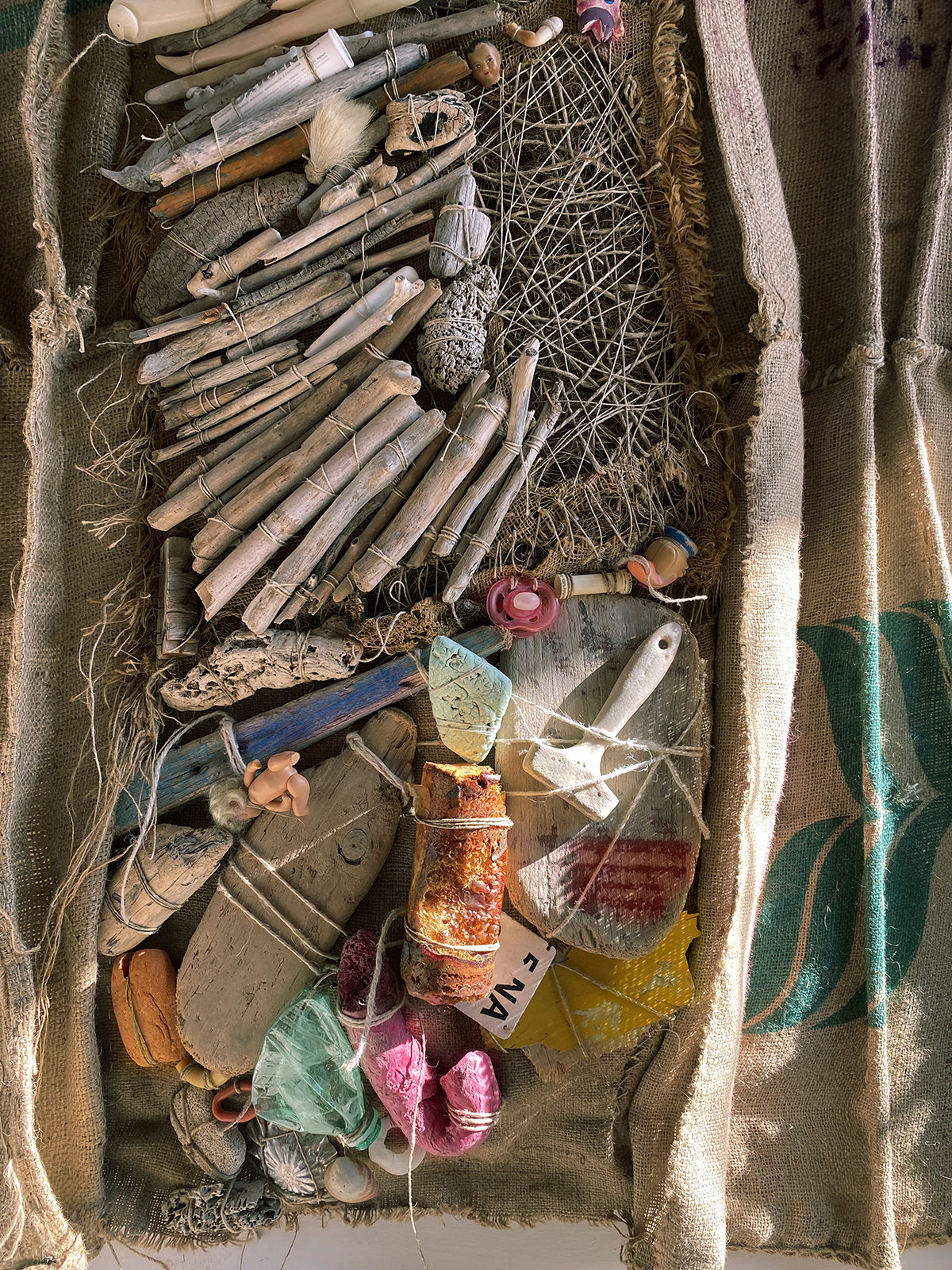
Upon this body, the sea deposits its residues: frayed nets, drifting plastics, smoothed pieces of wood, fractured shells. The result is a fragmented textile, a mosaic that recounts the stories of marine currents and denounces human indifference towards its own waste: abandoned, discarded and released without care, violating and destroying the balance of the earth.
And yet, the waste that accumulates along its shores is not merely debris: it becomes seeds, codes, matter in transformation. Here, metamorphosis takes place. The fragments intertwine, merge and reconfigure themselves into a new organism. No longer nature, no longer waste: an entity still without a name. Metamórphōsis, the fruit of the artist’s vision, is understood in a symbolic sense: it is the process itself of the encounter between different elements, capable of generating new forms of existence. Not a simple sum of materials, but a profound transformation that crosses disciplinary and conceptual boundaries, opening up alternative perspectives. A language in formation. This practice, founded on contamination and dialogue between different worlds, becomes a tool for reading the present and questioning the future.
De Rebus Naturae explores the multiple manifestations of hybridisation and metamorphosis, reconsidering balances and possibilities, and questioning what appears to be established. The artist, like a midwife of the possible, recomposes signs, interprets forms and transforms chaos into vision. Art thus becomes a driving force for change and a lens through which to imagine new horizons: a way of giving the sea’s discarded remnants a song never heard before.
Category
Textile Sculptures