








GREAT MOTHER – THE AMBIVALENCE OF THE MATERNAL
Great Mothers cycle
2012
60 × 160 cm
Canvas work, stuffed with jute and sewn with cords.
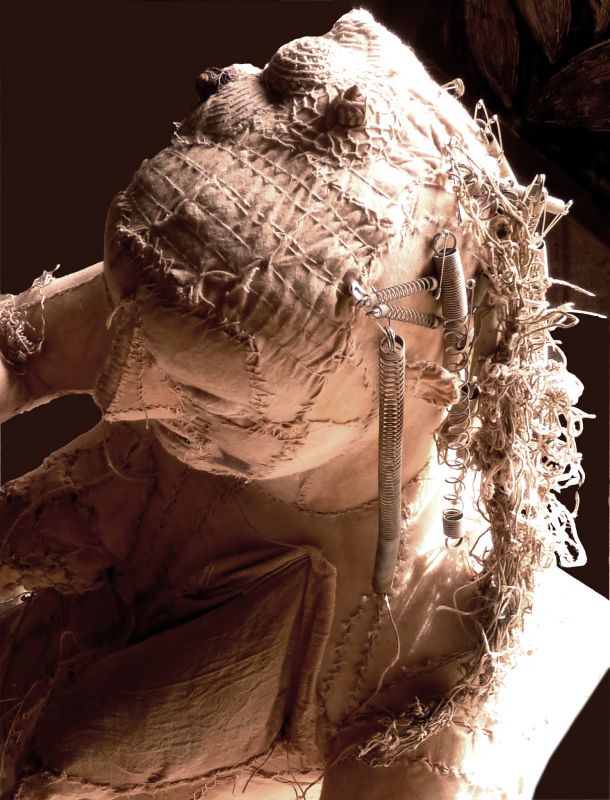
Hair made of shells and iron springs.
Base 60 × 82 cm
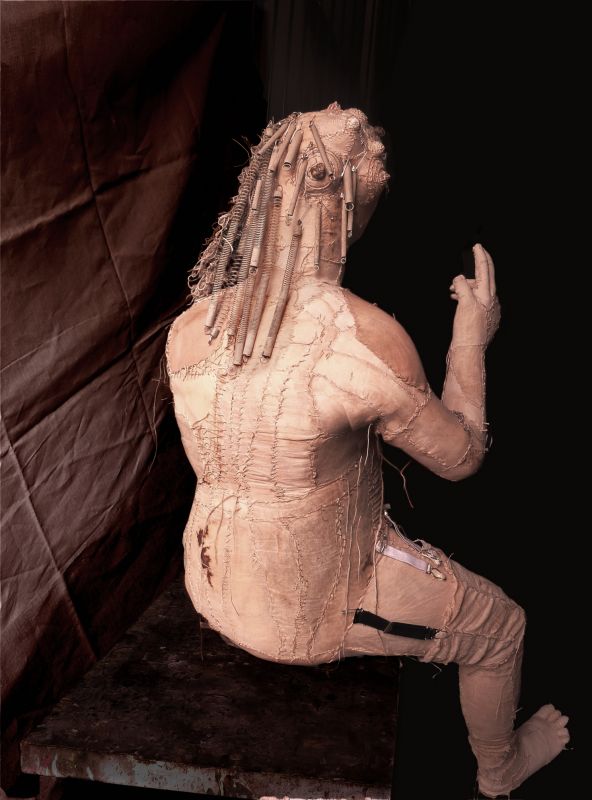
The Great Mother is a seated textile statue, a small monument that recounts a sacred and remote divinity while at the same time embodying those aspects that bring the Archetype closer to the human being, placing her in a suspended atmosphere, frozen in time.
The blessing gesture of her right hand emphasises the sacredness and regality of the image. It is a gesture of benevolence. The hand that blesses gives life, but it is also a gesture of power and condemnation. The left arm is extended towards the viewer as a gesture of welcome and an invitation to embrace.
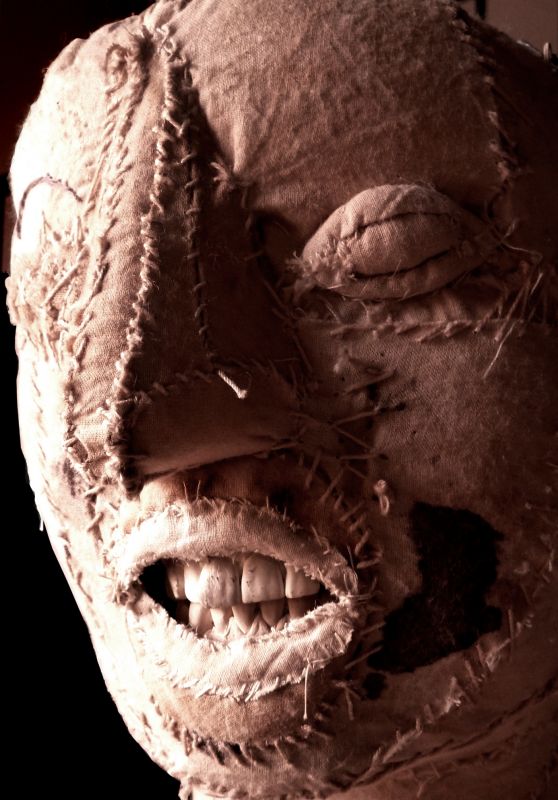
The Goddess presents a dual aspect, feminine yet at the same time animalistic, as the procreative and erotic power of the human body coexists with pure animal instinct. She is therefore a protective mother, but at the same time terrifying, because she nourishes while simultaneously devouring.
All the symbols associated with the Great Mother, or connected to the qualities of the “maternal”, are in fact marked by a strong ambivalence, a dual nature, both positive and negative: that of the “loving mother” and the “terrible mother”; a Mother who gives life but can also deny it, who forgives but can also punish.
Her open arms reveal her worn breast. It is a breast that has breastfed and nourished. Full of stretch marks, as is the rest of her body. She is a woman who has recently given birth; her sex is protected by the simulacrum of its double, as if to deny easy access to it.
The right leg is wrapped in a double layer of canvas, becoming a “stocking”, a typical element of feminine seduction. It is held by elastic bands and clips like a garter belt. The stocking is a symbolic skin. It is an ironic reference to that masculine stereotype of feminine seduction, which wants a woman to be partly saint and partly harlot.
In her hair, we can glimpse shells merging with embroidery and curls of metal, a reference to the myth of the origin of life from the primordial waters.
Category
Featured, Textile Sculptures