



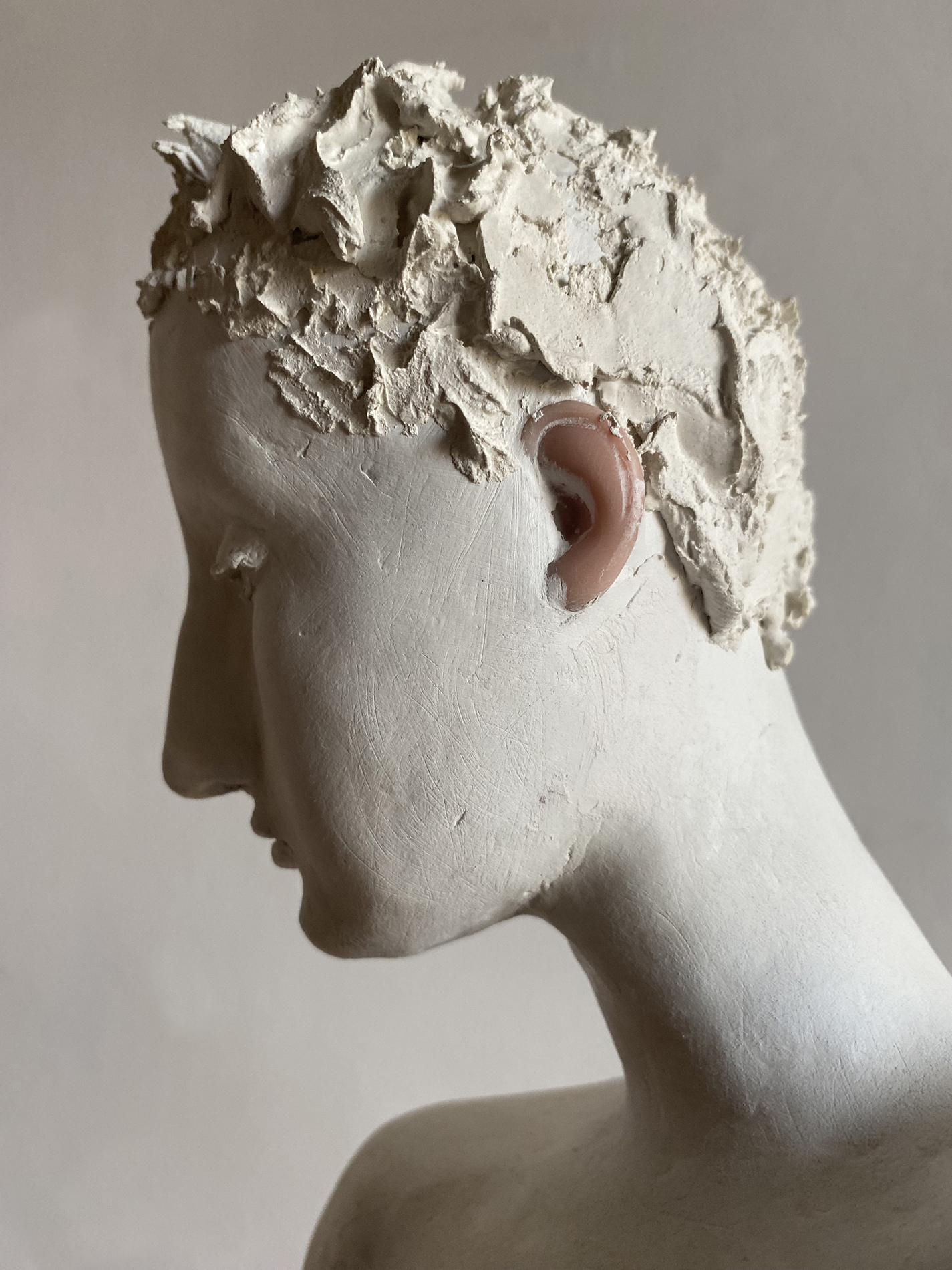


Erma
ARCHETIPI cycle
2023
20 × 57 h cm
Head and shoulders modelled in white clay. Antique wooden shoemaker’s last with an iron foot. Iron base.
Herms were placed along roads, at crossroads, at the boundaries of properties and in front of doorways to invoke the protection of Hermes, who was, among other things, regarded as the protector of travellers.
The herm derives from one of the earliest archaic forms of representing the “dwelling places” of a deity, which were placed to protect roads and thresholds. In the Archaic period, its form, with evident phallic allusions, was also associated with the wish for fertility.
The transformation from the herm of Hermes into the portrait herm must have occurred through the identification of Hermes as psychopompòs, that is, in his funerary role, in which he came to assume the physical features of the deceased. In Italic contexts, funerary stelae topped with the head of the deceased were widespread, and it was perhaps the merging of this tradition with the elegant Greek form that gave rise to portrait herms. Herms often feature a carved propitiatory phallus.
Category
Cult Objects